
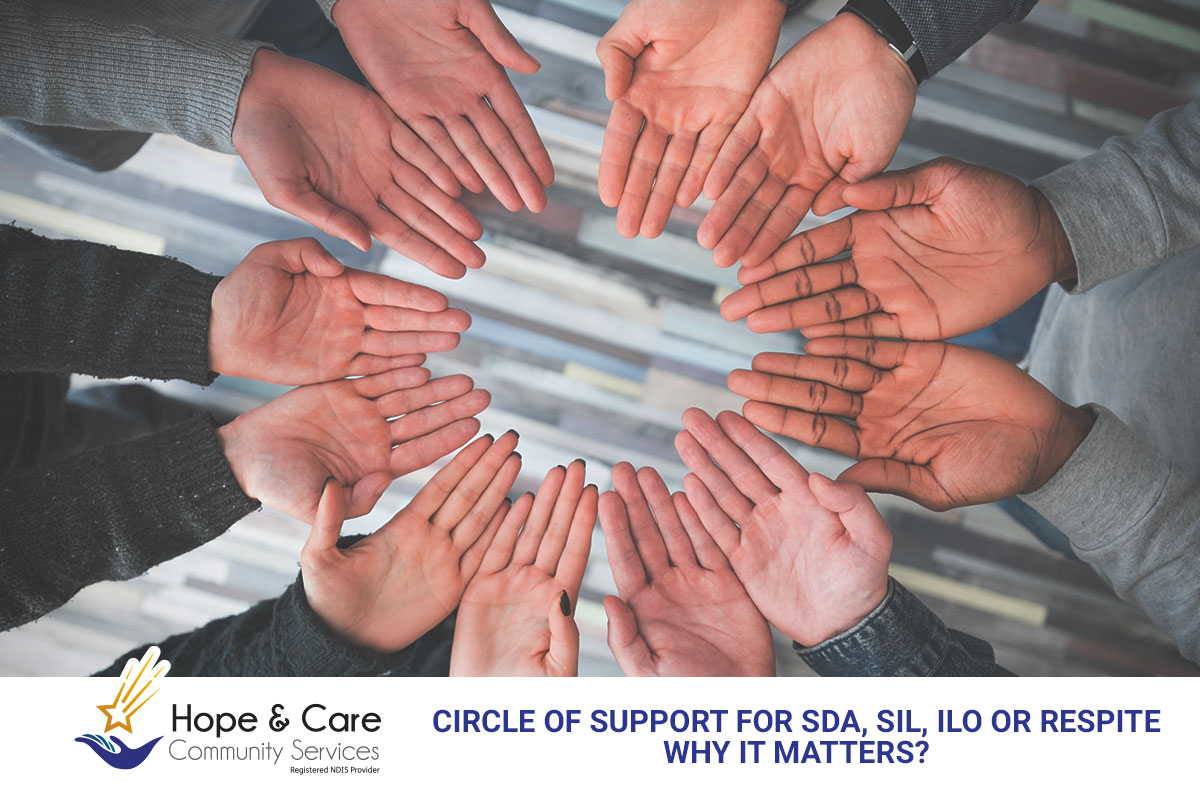
When families compare SDA, SIL, ILO or respite, they often start with vacancies, funding or rosters. Those details matter, but they should not lead the whole decision. A better starting point is the person, their goals and the life they want to build. That is where a circle of support becomes useful. COSAM describes a circle of support as a group of people who meet regularly with the person to help with thinking, planning and action, while listening to the person’s own ideas and choices.
What is a circle of support?
A circle of support is more than a meeting on a calendar. It is a trusted group built around the person. COSAM says circles can be formed at any age and can help with goals such as work, community connection, moving out of home, greater independence and future planning. The purpose stays simple: listen well, identify goals and plan the next steps together.
Why does it matter for SDA, SIL, ILO and respite?
These supports solve different problems, so people need clear thinking before they choose. SDA is specialised housing for people with extreme functional impairment or very high support needs. SIL funds support workers who help with daily tasks and supervision in the home, often across the full day and night. ILO helps design a living arrangement around the person’s preferences and supports, while short-term respite gives time apart from usual care arrangements and helps sustain informal support.
A circle helps people look past the vacancy
A vacant room does not always mean the right fit. A circle of support can ask better questions before a move starts. Does the home match mobility, communication, behaviour and overnight support needs? Will the person feel safe, respected and connected there, rather than simply placed there? Those questions matter because home and living decisions shape daily life, not just accommodation.
It matters even more with ILO and respite
ILO works best when the person explores what kind of home life suits them, who they want nearby and what support should feel like each day. The NDIS also notes that ILO may include support from family, friends and the broader community, which makes relationship planning very important. Short-term respite can also help a person try different routines, staffing approaches and time away from family without forcing a permanent move. In that sense, respite can support learning and stability, not only short-term relief.
What does a strong circle actually do?
A strong circle usually does four practical things. It keeps the person’s voice at the centre, turns goals into actions, notices risks early and helps everyone stay consistent. COSAM explains that circles support choice, identify goals and plan how to make things happen. That structure becomes even more valuable during transitions such as leaving the family home, changing providers or reviewing a support model.
A useful circle is small, clear and person-led
Not everyone needs to be in the room. The right people are the ones who know the person well, respect their choices and can help move plans forward. Depending on the situation, that may include family, friends, an advocate or trusted professionals. The key is that the person stays at the centre and the group protects choice, privacy and clear boundaries.
Common mistakes to avoid
One common mistake is treating housing as the only decision. Another is letting urgency push the person’s voice into the background. COSAM’s model works because it slows the process just enough for people to listen, plan and act with purpose. That is also why this matters for home and living pathways in Brisbane, where support needs and living goals can change over time.
Conclusion
For Brisbane participants and families, the takeaway is clear: a circle of support does not replace SDA, SIL, ILO or respite, but it helps you choose and use those supports well. Hope & Care Community Services is registered NDIS provider, with registration groups that include Specialised Disability Accommodation, Daily Tasks/Shared Living, Support Coordination, Behaviour Support, Plan Management and other disability supports. Readers who want local guidance can explore the HCCS provider website, services page, SIL / SDA properties page and Brisbane-focused blog for related information on housing, support coordination and home and living decisions.
Want to learn more? Read other articles :
- SIL / SDA Properties
- New Guidelines for the Short Term Respite – Formerly Known as Short Term Accommodation (STA) in Brisbane
- SDA vs SIL: Understanding the Difference
- Change in NDIS SIL: What the New Reforms Means
HCCS is a registered NDIS provider. Learn more about our services.
♥ We are available in Brisbane! – Our team is just a call away!