
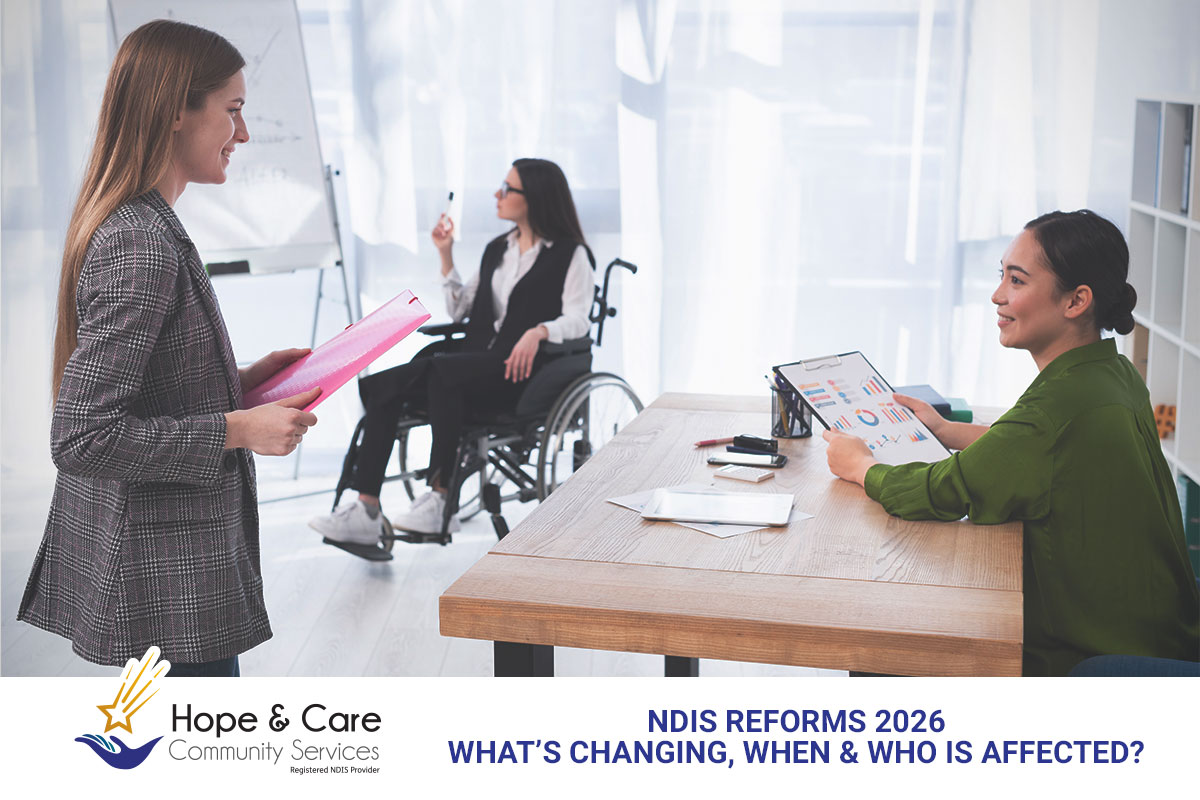
NDIS reforms 2026 are moving from policy into real rollout. The Australian Government introduced the National Disability Insurance Scheme Amendment (Securing the NDIS for Future Generations) Bill 2026 on 14 May 2026. The reform package covers access, planning, claims, provider rules and fraud controls. Some changes start in 2026, while others continue through 2027 and 2028.
What is changing first in 2026?
The first major change affects Supported Independent Living. From 1 July 2026, SIL provider registration changes began. Participants using SIL do not lose their plan or funding because of this change. However, their SIL provider must be registered, or apply to register, by 1 October 2026. If a provider does not register, participants may need support to move to a registered provider.
Another major change starts on 1 October 2026 through Thriving Kids. This new support pathway sits outside the NDIS for some children. It is aimed at children aged 8 and under with developmental delay and/or autism who have low to moderate support needs. Children with permanent and significant disability, or high support needs, will still remain eligible for the NDIS under usual arrangements.
Claims will also tighten. From 1 December 2026, the time to make a claim for supports under a participant’s plan will drop from 2 years to 90 days. This is a major operational shift for participants, plan managers and providers. It means invoices, records and payment requests will need faster follow-up than before.
What changes after 2026?
The next large reform step is the new way of planning. The NDIA says support needs assessments will roll out from April 2027. These assessments aim to create fairer and more consistent budgets. The reform package also tightens the rules for unscheduled plan reassessments and gives the NDIA up to 90 days to decide whether to vary or reassess a plan.
Provider oversight will also expand. The Department says most in-scope providers will need to enrol with the NDIA from 1 July 2027 so they can be paid directly. Plan management will move to a commissioned panel from 1 October 2027, with an initial six-month transition period. Support coordination is scheduled to move to a directly appointed service model from 1 July 2028.
Access rules will change again from 1 January 2028. New applicants will be assessed using a standardised functional capacity assessment. The Department also states that people already in the NDIS will be reassessed progressively over 3 years. For families, this means future access decisions may focus more on day-to-day function than diagnosis alone.
Who is affected most?
SIL participants and SIL providers are affected first. Children aged 8 and under with developmental delay and/or autism may also see a different pathway from October 2026 if they have low to moderate support needs. Plan managers, support coordinators and service providers will feel pressure from the shorter claims window and the tighter compliance settings. New applicants from 2028 will face the clearest eligibility shift.
For Brisbane participants, the practical impact is simple. You may need to review who delivers your supports, how quickly invoices are submitted, and what evidence supports your next reassessment. Families with younger children should also watch the Thriving Kids rollout closely. People using plan management or support coordination should keep an eye on the 2027 and 2028 changes now, not later.
What should Brisbane participants do now?
Start with your current plan. Check your service agreements, keep invoices organised, and ask your SIL provider whether they are registered or applying to register. If your situation has changed, begin collecting current evidence before your next reassessment. Early preparation will matter more as timeframes shorten and planning becomes more structured.
Hope & Care Community Services can support Brisbane participants through this transition. HCCS is an approved NDIS provider, and its Brisbane-based service offering includes disability support, personal care, in-home supports, community and civic participation, Supported Independent Living, SDA, plan management, Positive Behaviour Support and support coordination with approved registration groups that include Support Coordination, Plan Management, Supported Independent Living, Specialised Disability Accommodation and daily personal activities.
Thoughts
NDIS reforms 2026 are designed to make the Scheme more structured, more sustainable and harder to misuse. At the same time, they bring faster claiming, tighter planning rules and more change for participants, families and providers. For Brisbane participants, the best next step is to prepare early and review supports before deadlines arrive. Hope & Care Community Services is here to help participants across Brisbane navigate reform changes with practical support, clear communication and services that match real daily needs.
Want to learn more? Read other articles :
- SIL / SDA Properties
- New Guidelines for the Short Term Respite – Formerly Known as Short Term Accommodation (STA) in Brisbane
- How Will Budgets Be Calculated Under New Framework Plans?
HCCS is a registered NDIS provider. Learn more about our services. or NDIS
♥ We are available in Brisbane! – Our team is just a call away!