
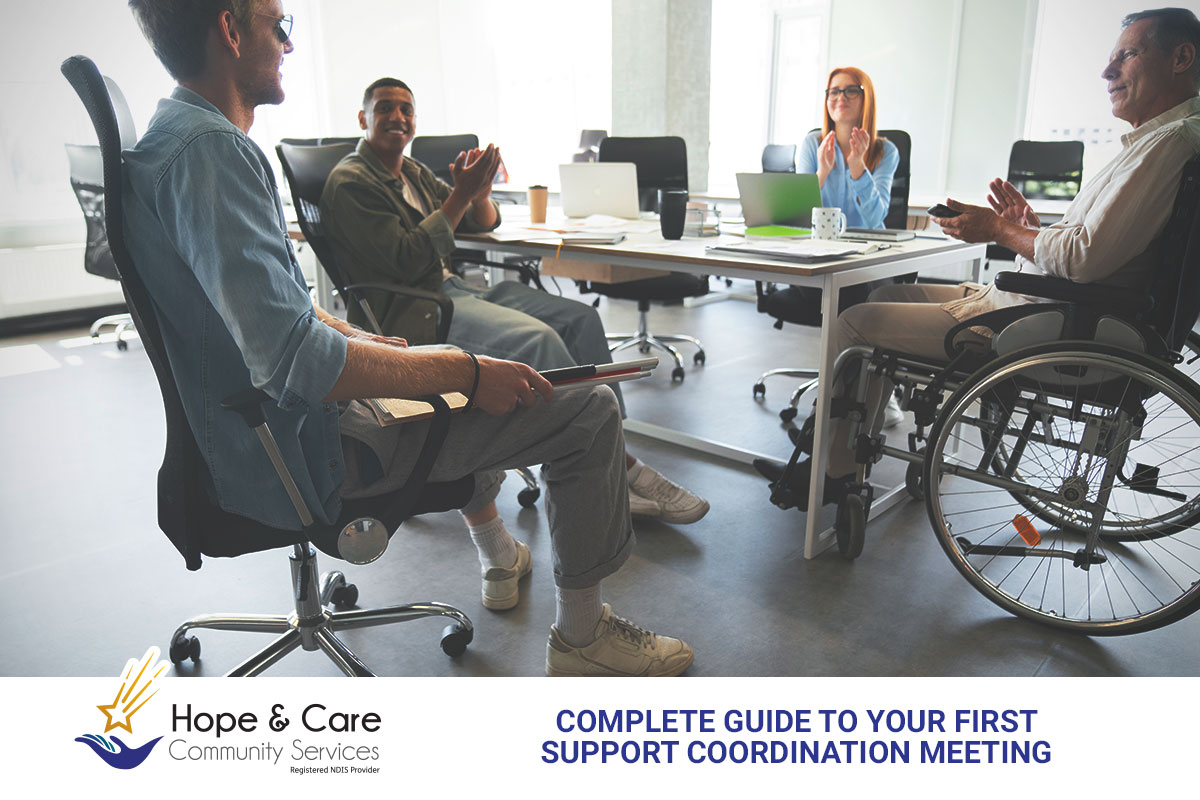
Your first support coordination meeting can feel like a big step. Many Brisbane participants know they have support coordination funding, but they still feel unsure about the first appointment. That is normal. This meeting is not a test. It is the start of a working partnership that helps turn your NDIS plan into practical support.
What your first meeting is really for?
The NDIS says support coordinators help you understand your plan, use your budgets, choose suitable providers, connect with community supports, and build confidence to manage supports over time. In the first meeting, the provider should meet with you, listen to your preferences, and create a service agreement with you. The NDIS also says this meeting should be face to face if that is your preference.
In plain terms, the first meeting is where the plan starts to make sense. You and your coordinator usually talk about your goals, your daily challenges, and how you want supports delivered. You may also discuss current providers, family supports, risks, transport, housing, communication needs, and what is not working right now. A good meeting should feel clear, respectful, and centred on your choices.
What to bring with you?
Good preparation makes the meeting easier. Bring your current NDIS plan, any recent reports, provider details, quotes if you already have them, and a short list of questions. It also helps to write down your goals, daily support needs, and any changes since your plan started. The NDIS planning guidance encourages participants to think about day-to-day needs, support networks, goals, and new evidence before important meetings.
Do not worry if you do not have every document ready. The reference guide notes that a good coordinator can help you gather missing items over time. What matters most is that you arrive with a clear picture of what you want help with. Many participants also bring a family member, carer, or trusted friend for support. That can make the conversation easier and help with note taking.
Questions worth asking in the first appointment
The NDIS says it helps to speak with a support coordinator before signing up and ask practical questions. These include how much they charge, whether they work with people with your disability, what outcomes they have achieved, who you will likely work with, and what their cancellation policy is. These questions help you judge whether the relationship feels right.
You can also ask how often you will hear from them, how they handle service agreements, what happens when providers are not the right fit, and how they prepare for future plan reviews. These questions matter because support coordination is not only about referrals. It is also about making sure services work together and keep working over the time. When the fit is right, you should leave the meeting knowing your next steps.
What usually happens after the meeting?
After the first meeting, the real implementation work begins. HCCS describes support coordination as helping participants find suitable services, obtain quotes, coordinate providers, monitor delivery, negotiate service agreements, connect with government and community supports, and review goals before planning meetings and later reviews. That gives you a good idea of what strong follow-up should look like.
The NDIS also requires support coordinators to report across the life of a participant’s plan. These reports include an initial plan implementation report, regular mid-term reporting, and a report before the next plan reassessment. The initial implementation report is completed 8 weeks after the plan begins, or after the support coordinator accepts the request for service. That is why the first meeting matters so much. It shapes the action plan and the evidence that follows.
Why this matters for Brisbane participants?
Brisbane participants often use a mix of supports across home, community, therapy, behaviour support, transport, and housing. When several providers are involved, small gaps can create bigger problems. HCCS’s Brisbane support coordination content highlights the hidden work that sits behind good coordination, including reading the plan closely, lining up providers, checking service agreements, and spotting gaps between funded supports and daily life.
That is why your first meeting should end with simple clarity. You should know your main goals, your first provider priorities, and the next action date. You should also know who to contact, how communication will happen, and what your coordinator will do first. In practice, that early clarity reduces stress and helps your plan move faster.
Conclusion
A strong first support coordination meeting should leave you feeling clearer, not overwhelmed. It should help you understand your plan, organise your next steps, and start building supports that match your life. If you prepare your goals, questions, and key documents early, you give the meeting a much better chance of success.
At Hope & Care Community Services, we help Brisbane participants turn plans into action with practical, independent support coordination. We can also assist across personal care, in-home supports, community and civic participation, plan management, Positive Behaviour Support, allied health, Supported Independent Living, and SIL or SDA housing pathways. HCCS supports participants across Brisbane South, Brisbane North, and Brisbane South West, which can make coordination easier when supports need to work together locally.
Want to learn more? Read other articles :
- SIL / SDA Properties
- NDIS Reforms 2026 What’s Changing, When, and Who Is Affected
- How Will Budgets Be Calculated Under New Framework Plans?
- Exploring NDIS SIL Properties with Hope and Care
HCCS is a registered NDIS provider. Learn more about our services. or NDIS
♥ We are available in Brisbane! – Our team is just a call away!