
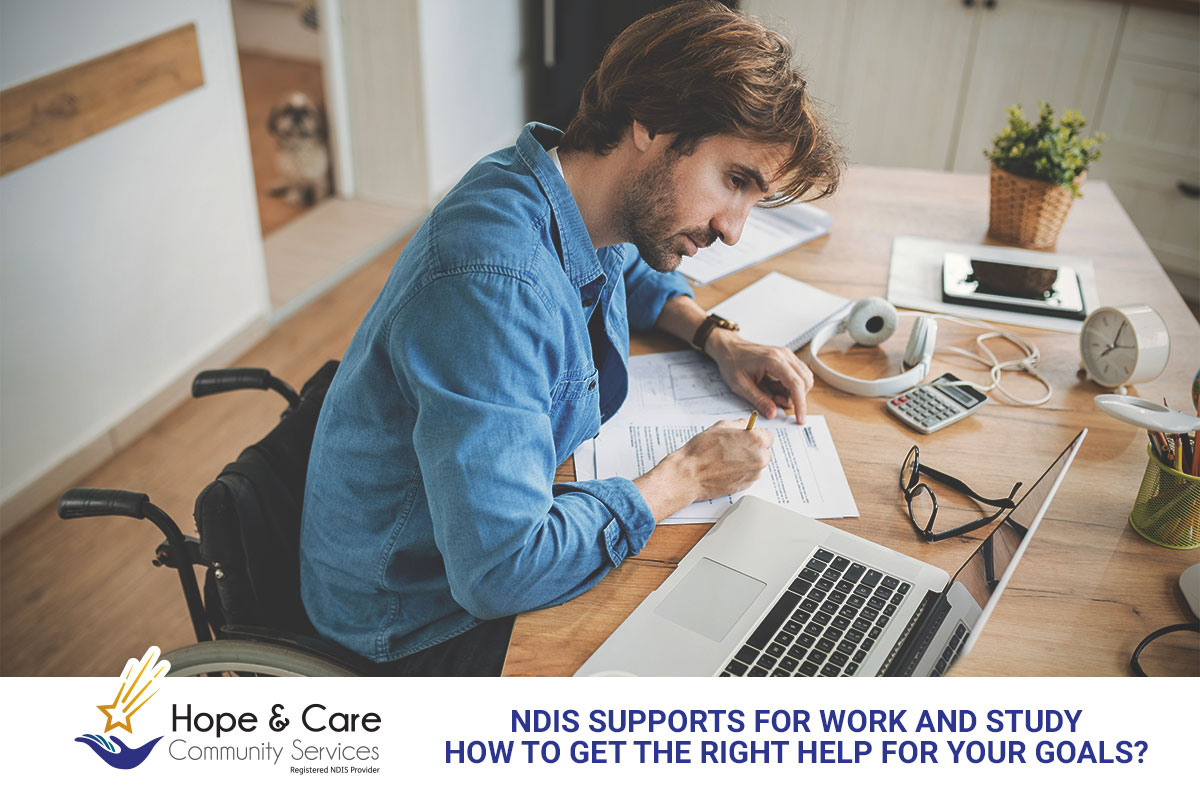
NDIS supports usually cater community connections and improving day to day life activities wherever possible, However, disability-related barriers may make starting or continuing harder when requirements grow. NDIS supports for work and study may help you build skills and participate more independently. Good planning starts with clear goals, useful evidence and an understanding of each provider’s responsibilities.
Why Work and Study Goals Matter?
Your NDIS goals guide conversations about the supports you may need. A clear goal explains what you want to achieve and why it matters. It could involve finishing a TAFE course, starting university or finding part-time work. You may also want to keep your current role or explore a new career.
Make each goal specific and practical. Rather than saying, “I want a job,” describe the work that interests you. You could aim to improve workplace communication or travel independently to your course. Clear goals help identify barriers and suitable support options.
What NDIS Study Supports May Include
The NDIS may fund extra support you need because of your disability. The support must relate to your needs and help you pursue your study goal. Examples may include personal care at university or training for an accessible travel route. Disability-specific assistive technology may also help across study and daily life.
Schools, TAFEs and universities remain responsible for learning supports and reasonable adjustments. These may include accessible teaching, modified course materials and campus access. The NDIS does not usually fund tuition, textbooks, uniforms or standard learning equipment. It also does not replace teachers, tutors or ordinary student services. Your education provider’s accessibility service before your course begins. Ask what adjustments they can provide. Then record any remaining disability-related support gaps. This information can guide your NDIS planning conversation.
What NDIS Employment Supports May Include
Employment supports can help you prepare for work, change roles or keep a job. They may build workplace skills, address disability-related barriers or support career planning. Some participants may need on-the-job coaching, mentoring or help managing complex needs. Others may need personal care while working.
Employment-related assessment and advice may help you understand your strengths. These supports can identify suitable roles, environments and routines. Every funded support must meet NDIS rules and align with your individual plan. mainstream employment services also have responsibilities. Employers must consider reasonable workplace adjustments unless they cause unjustifiable hardship. Adjustments may include flexible hours, accessible recruitment materials or equipment changes. NDIS funding generally covers extra disability supports beyond these responsibilities.
Begin by describing the barrier, not only the service you want. Explain how your disability affects attendance, communication, travel, personal care or task completion. Connect that barrier with a clear work or study outcome. This shows how support may increase your independence and participation.
Useful evidence may include allied health reports or information from current support providers. Course details, workplace feedback and accessibility plans may add context. Evidence should explain your functional needs and each support’s expected benefit.
Prepare for your planning conversation with these steps:
- Write one or two clear employment or education goals.
- Describe the disability-related barriers affecting each goal.
- Identify what your education provider or employer already offers.
- Gather reports that explain your functional support needs.
- Estimate where, when and how often support is required.
- Decide how you will review progress and outcomes.
Keep notes about achievements, challenges and changing needs during your plan. These records may support future planning discussions. Review your approach when your course, job or goals change.
Choosing Support That Fits Your Goals
Good support should build your skills without limiting your independence. Choose workers who listen, communicate clearly and respect your decisions. They should understand your routines, strengths and preferred learning style. Consistent support can also build confidence in new environments.
Ask providers how they measure progress and coordinate with other services. Discuss schedules, transport, cancellations and workplace boundaries before starting. Your service agreement should clearly describe your goals and agreed support.
Moving Forward with Hope & Care Community Services
Hope & Care Community Services can help Brisbane participants turn work and study goals into practical arrangements. Our team can assist with support coordination, personal care, in-home support and community participation. We can also help you understand budgets through plan management and coordinate support around daily routines. arrangements can support attendance and long-term progress. When housing forms part of your independence goals, we can discuss SIL and SDA options across Brisbane and South East Queensland. Our approach focuses on your choices, abilities and preferred pace. p can make employment or education goals feel more achievable. Start with a clear outcome, identify your barriers and gather useful evidence. NDIS supports for work and study in Brisbane should help you develop skills and participate with confidence.
Want to learn more? Read other articles :
- NDIS Reforms 2026 What’s Changing, When, and Who Is Affected
- Supported Independent Living (SIL)
- Occupational Therapy for Daily Living under NDIS
HCCS is a registered NDIS provider. Learn more about our services. or NDIS
♥ We are available in Brisbane! – Our team is just a call away!