
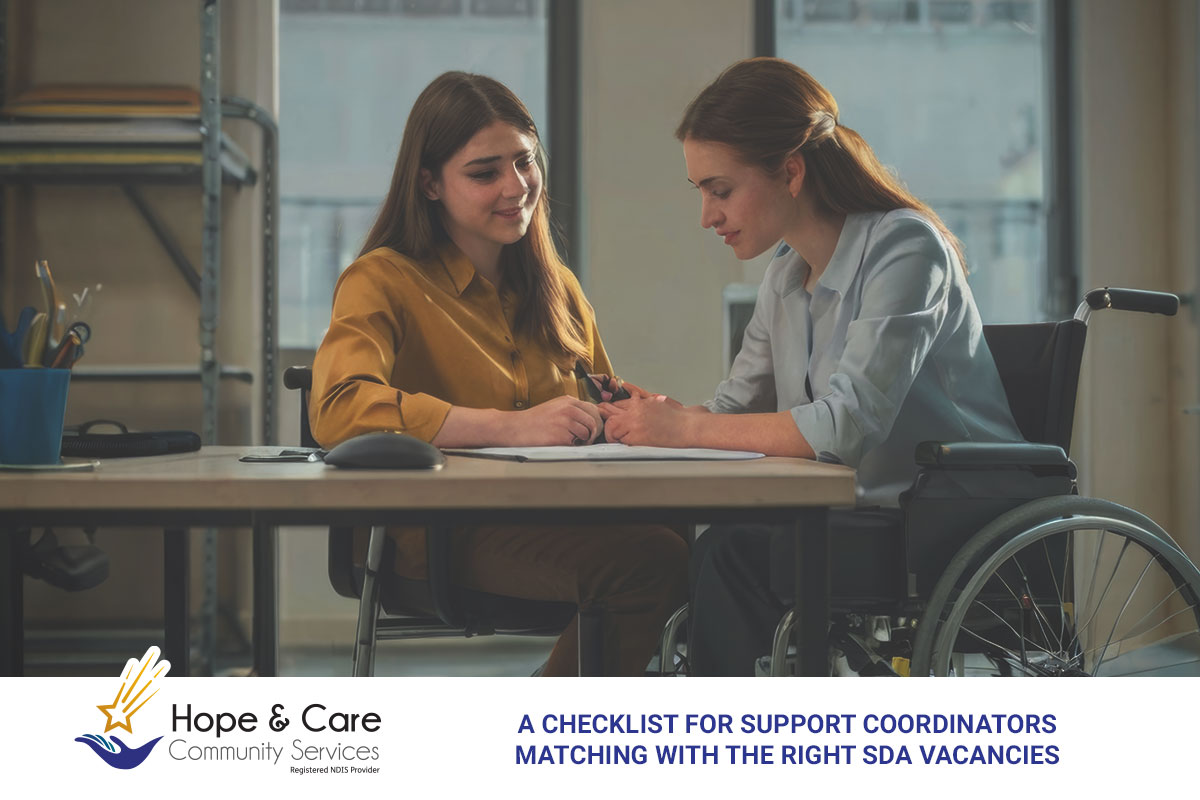
Matching a participant with Brisbane SDA vacancies requires a structured approach. Availability matters, but suitability matters more. Support Coordinators need to compare the participant’s assessed needs with the home’s design, location and support environment. A careful match can reduce unsuitable referrals and help participants explore housing with greater confidence.
Start With the Participant’s Physical and Functional Needs
Before reviewing properties, identify what the participant needs from the physical environment. Consider mobility, transfers, sensory needs, behaviour support needs and daily support routines.
The NDIS uses several SDA design categories for different functional requirements.
Improved Liveability provides enhanced physical access and features for people with sensory, intellectual or cognitive impairments. Clear sightlines and easier navigation may support greater confidence at home.
Fully Accessible housing provides a higher level of physical accessibility. It may suit participants who use wheelchairs or have significant mobility limitations.
High Physical Support includes advanced accessibility for people with very high physical support needs. Features can include home automation, emergency power systems and provisions for specialised equipment.
Robust housing focuses on durability and safety. It may suit participants whose disability-related needs include complex behaviours or environments requiring stronger building materials.
The design category should guide the shortlist. However, Support Coordinators should also examine individual property features before recommending a walkthrough.
Match the Design Category to the Actual Home
A category label provides an important starting point. It does not replace a detailed review of the property.
For example, Hope & Care Community Services currently lists SDA homes across several Brisbane regions. Its Slacks Creek and Spring Mountain properties list High Physical Support, Fully Accessible and Improved Liveability design categories.
The Slacks Creek property also includes Onsite Overnight Assistance and accommodates two SDA residents. Spring Mountain includes OOA and wheelchair-focused features, including accessible bathrooms and wider doorways.
In Brisbane’s north, the Morayfield property lists Fully Accessible and Improved Liveability categories alongside accessible property features. The current listing identifies accommodation for three SDA residents.
Caboolture provides another option for participants exploring Improved Liveability or Robust-related housing needs. Its layout includes spacious bedrooms, multiple living areas and a dedicated OOA room.
These differences matter when preparing a shortlist. A participant may meet the broad category requirements but still need specific environmental features.
Check Wheelchair and Mobility Requirements Carefully
For participants with substantial mobility needs, assess more than doorway access. Look at movement throughout the entire property.
Consider bedroom circulation space, bathroom configuration and access to communal areas. Review the kitchen layout, outdoor areas and accessible parking where relevant.
Also consider equipment. A participant using a powered wheelchair may need different circulation space from someone using a manual chair. Transfers, hoists and other assistive technology may affect suitability.
Support Coordinators can use occupational therapy reports and functional assessments when comparing these requirements. This information can make property discussions more specific and productive.
Consider OOA and Overnight Support Requirements
Onsite Overnight Assistance can influence whether an SDA property works for a participant’s support model.
An OOA space allows overnight workers to remain onsite in a separate area. This can support staff availability while maintaining clearer boundaries around participant living spaces.
However, OOA availability does not automatically mean every overnight support arrangement will suit the participant. Review the participant’s funded supports and expected overnight needs.
Check whether the property includes OOA before arranging a viewing. Also ask how the space relates to bedrooms and communal areas.
This step becomes especially important when a participant needs predictable overnight assistance or rapid staff access.
Check Regional and SDA Funding Alignment
Location should form part of the matching process from the beginning. Do not wait until a participant chooses a property.
Review the participant’s current NDIS plan and SDA information. Check the relevant design category, building type and approved or assessed location. The proposed vacancy should align with the participant’s SDA arrangements.
This matters across greater Brisbane because vacancies may fall into different SDA locations. A property in Brisbane South may not align in the same way as a Moreton Bay or Brisbane North property.
For example, current HCCS listings identify Slacks Creek and Spring Mountain within Brisbane South. Morayfield sits within Brisbane North, while Burpengary falls within the Moreton Bay area.
Where plan information appears unclear, confirm the position before treating a vacancy as a final match. This can prevent delays later in the transition process.
Look Beyond the Building
A strong housing match should also support the participant’s everyday life.
Consider access to healthcare, shops, public transport and community activities. Think about family connections and existing support networks. The location should make important routines practical.
Household compatibility also deserves attention. Review the expected number of residents and available private areas. Discuss preferences around shared living before progressing.
Support Coordinators should also consider how existing core supports will operate within the property. Some homes may have different arrangements for onsite or shared support.
Prepare the Right Information Before a Walkthrough
A focused walkthrough becomes more useful when the property team understands the participant’s needs beforehand.
Prepare information about the required SDA category, preferred region and mobility needs. Include relevant accessibility requirements and expected support arrangements.
It also helps to explain preferred household size and any important environmental considerations. Sensitive participant information should only be shared through appropriate referral and consent processes.
During the walkthrough, examine how the home works in practice. Check bedrooms, bathrooms, pathways and shared spaces. Discuss OOA arrangements where relevant.
A visual inspection can often answer questions that photographs cannot.
How Hope & Care Community Services Can Assist?
Hope & Care Community Services can work with Support Coordinators exploring suitable SDA vacancies across Brisbane. Our team can discuss current property availability, design categories, household arrangements and accessibility features before a participant progresses further.
We can also coordinate property walkthroughs so Support Coordinators, participants and decision-makers can assess a home more closely. To request a prompt property discussion or walkthrough, Support Coordinators can call (07) 3892 1990 or email support@hccs.net.au with the participant’s preferred Brisbane region and required SDA category.
A good SDA match should connect the participant’s functional needs, funding arrangements and preferred lifestyle. Starting with these factors creates a stronger shortlist. It also helps Support Coordinators spend more time exploring genuinely suitable housing options.
Want to learn more? Read other articles :
- NDIS Reforms 2026 What’s Changing, When, and Who Is Affected
- Supported Independent Living (SIL)
- Onsite Overnight Assistance Rooms in Brisbane Robust SDA: Why They Matter for Crisis Prevention
HCCS is a registered NDIS provider. Learn more about our services. or NDIS
♥ We are available in Brisbane! – Our team is just a call away!