
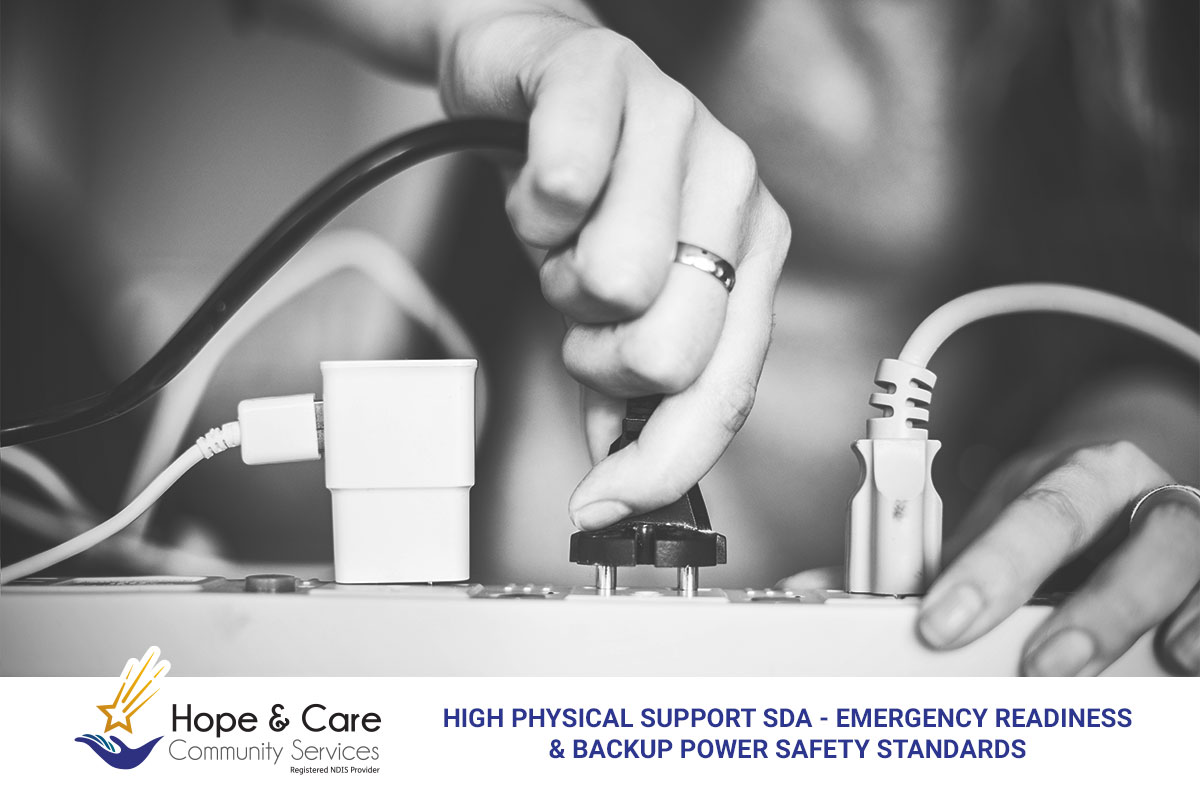
For people who rely on powered supports, a safe home needs more than accessible rooms. High Physical Support SDA in Brisbane includes design features that help protect participants during power interruptions. Backup power, accessible exits and assistive technology readiness all contribute to a safer living environment.
A power outage can be inconvenient in any home. In High Physical Support housing, it can affect essential equipment, automated doors and daily routines. The SDA Design Standard requires emergency power solutions in High Physical Support dwellings. These solutions must support at least a two-hour outage. They must also serve nominated bedroom power points and automated entry or egress doors.
Why Backup Power Matters in High Physical Support Housing?
Some participants use powered equipment for positioning, communication or other disability-related needs. Others depend on automated doors to move safely through their home. A loss of mains power can therefore create more than temporary inconvenience.
Emergency power gives residents and support teams valuable time to respond safely. It can keep nominated power outlets available while an outage continues. It can also support automated entry and exit doors covered by the design requirement.
However, residents should confirm which devices connect to emergency power outlets. A property’s backup system should form part of a wider emergency plan.
Participants, families and support teams can identify priority equipment before an outage occurs. They can also check battery duration, charging requirements and manufacturer guidance for personal equipment.
What the High Physical Support SDA Standard Requires?
High Physical Support is one of the four SDA design categories. It supports people with significant physical impairment who require very high levels of support. The category combines a high level of physical access with additional specialist features.
The emergency power requirement is specific. High Physical Support dwellings need an emergency solution for a minimum two-hour outage. The standard requires emergency power at no fewer than two double general power outlets in participant bedrooms. It also covers provided automated doors used for entry or egress.
That does not mean every appliance within the property runs on backup power. It also does not replace emergency planning for individual equipment.
The safest approach considers the property’s infrastructure and the participant’s personal equipment together. This helps everyone understand what will continue operating if mains electricity becomes unavailable.
Safety Goes Beyond the Switchboard
Emergency readiness also depends on how the entire home works during disruption. Clear and accessible movement routes remain important when powered features become limited. Support workers should also understand the household’s emergency procedures.
High Physical Support design considers more than emergency electricity. The standard includes requirements around accessible heating and cooling, ceiling hoist provisions and assistive technology readiness. These features help create homes suited to people with very high support needs.
When viewing an HPS property, ask practical questions about its backup system. Find out which outlets receive emergency power and how the system activates.
Ask what happens to automated doors during an outage. You can also confirm maintenance and testing arrangements with the appropriate property contact.
Preparing for Power Disruptions in Brisbane
Brisbane and South East Queensland households should include power interruptions within their emergency planning. A clear household plan can make unexpected outages easier to manage.
Keep important contacts available in more than one format. Label priority power points and keep essential charging equipment somewhere accessible.
Support teams can review emergency instructions during routine support planning. For medical or life-support equipment, always follow the manufacturer’s backup power and emergency instructions.
Good communication also matters. Everyone involved should know which equipment has its own battery and which equipment relies on property backup power.
Making Safety Features Visible in Property Photos
Good property photography can help participants and families understand safety infrastructure before an inspection. Use crisp images of the exterior, garage and relevant utility areas.
Simple text badges can highlight confirmed features. Examples include “Emergency Power System”, “Accessible Entry” and “Automated Door Support”.
Keep these descriptions factual and easy to understand. Only highlight a safety feature when property documentation confirms it.
Choosing Safer High Physical Support SDA in Brisbane
Emergency power provides an important layer of protection, but it works best within a complete safety plan. Participants should understand both the property’s backup infrastructure and their individual equipment needs. Support coordinators and families can use these questions when comparing suitable housing.
Hope & Care Community Services can help participants explore SIL and SDA property options across Brisbane and surrounding areas. Our team can also discuss supports around the home, including support coordination and in-home assistance. We focus on matching practical support with each person’s living goals, routines and individual circumstances.
Want to learn more? Read other articles :
- SDA, SIL, ILO or Respite: How Brisbane Participants Can Think About Housing and Support as a Pathway, Not a One-Time Choice
- Supported Independent Living (SIL)
- Onsite Overnight Assistance Rooms in Brisbane Robust SDA: Why They Matter for Crisis Prevention
HCCS is a registered NDIS provider. Learn more about our services. or NDIS
♥ We are available in Brisbane! – Our team is just a call away!