
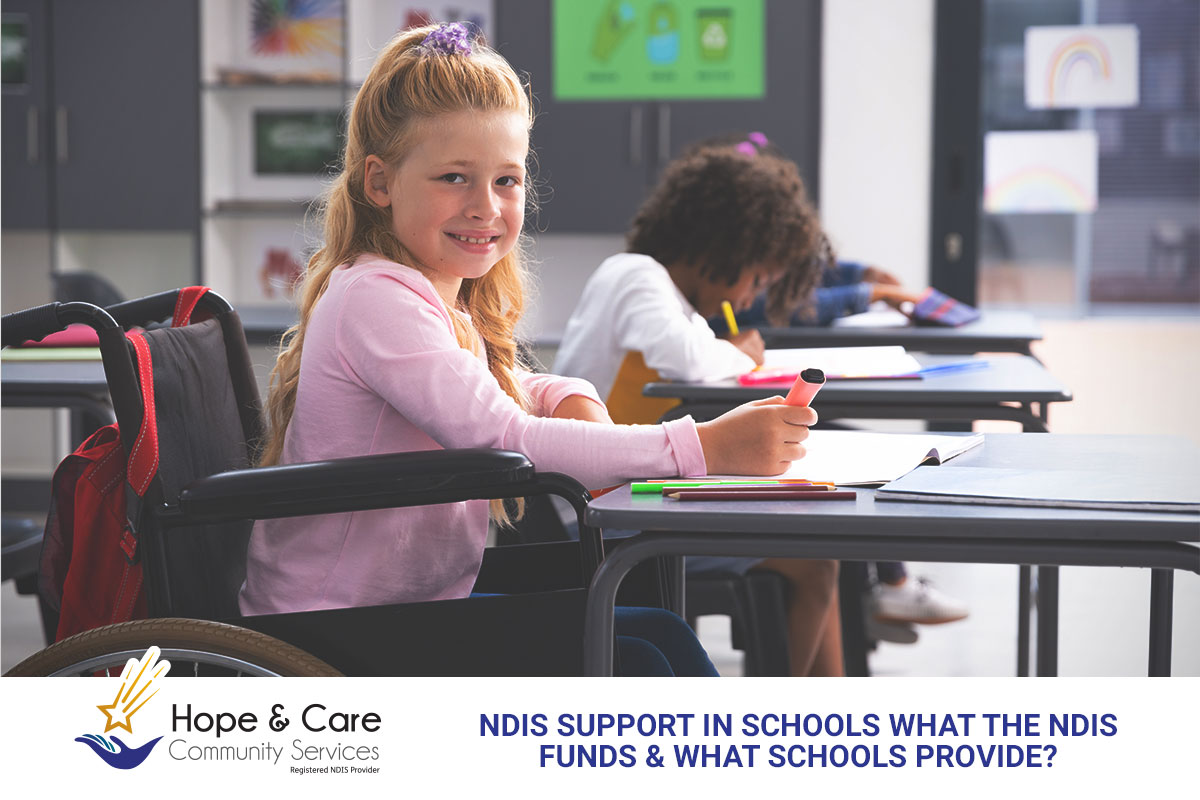
NDIS support in Australian schools can play an important role in helping students with disability participate more comfortably in school life. However, many families find it challenging to understand which supports the NDIS provides and which supports fall under the responsibility of the school system.
With the school year approaching, now is the ideal time to clarify how school-related supports work and how families can navigate both systems with confidence.
Understanding NDIS Support in Australian Schools
To begin with, schools in Australia have a legal responsibility to support students with disability. Education providers must take reasonable steps to ensure students with disability can access education, facilities and services on the same basis as students without disability.
Schools receive disability-related funding across government, independent and Catholic systems. However, the type and level of support varies depending on the school and the state or territory. For this reason, families should always speak directly with their child’s school to understand what educational supports are available.
In contrast, the NDIS plays a different role. NDIS support in Australian schools focuses on disability-related needs that are not funded by the education system. Because schools already provide many supports, the NDIS only funds specific types of assistance.
What NDIS Support in Australian Schools May Include
Although the NDIS does not fund teaching or learning assistance, it may fund supports that help a child manage their disability and take part in school life.
Self-Care Support at School
Firstly, the NDIS may fund additional self-care supports related to a student’s disability. This can include assistance with toileting, eating, dressing or mobility during school hours. However, because some self-care supports may already be provided by schools, families should always check with the school before requesting NDIS funding.
Specialised Training for Teachers and Staff
In some cases, NDIS support in Australian schools may include specialised training for teachers or school staff. This training helps staff understand a student’s specific disability-related support needs rather than general teaching strategies.
Transport Support
Additionally, when a student cannot travel to and from school independently because of their disability, the NDIS may fund specialist transport supports. This assistance helps ensure consistent access to education.
Assistive Technology
The NDIS may also fund transportable assistive technology that supports a student’s daily functioning. Examples include wheelchairs or personal communication devices. However, standard educational tools, such as laptops or tablets used by all students, remain the school’s responsibility.
Therapy Supports During School Hours
Finally, the NDIS may fund therapy supports that build functional skills rather than academic outcomes. These supports must be agreed upon by both the family and the school. Since schools may already offer therapy services, families should discuss existing options with the school first.
What the NDIS Does Not Fund
Equally important is understanding what the NDIS does not fund in school settings.
NDIS support in Australian schools does not include:
- School fees or uniforms
- Classroom learning support or academic tutoring
- Curriculum adjustments or schoolwork assistance
- Everyday supplies such as textbooks or stationery
- School excursions, camps or extracurricular activities
- Sporting equipment or musical instruments
In short, if a support relates directly to education or learning, the school system remains responsible.
Supports Provided by the Education System
Meanwhile, schools provide a wide range of supports that help students with disability access education.
These supports typically include:
- Teachers, learning assistants and classroom support staff
- General training and resources for school staff
- Therapy delivered for educational purposes, such as curriculum adjustments
- Equipment that makes learning accessible, including modified software or Braille materials
- Adjustments to buildings, such as ramps, lifts or hearing loops
- Transport for school activities like excursions and sporting events
- Day-to-day supervision and behavioural support
Depending on the setting, schools may also provide some personal care supports, such as assistance during mealtimes.
Personal Care in Schools and NDIS Plans
For school-aged students, an NDIS plan may include the item “Personal care in schools.” Importantly, this does not mean the NDIS funds the support directly.
Instead, this item acknowledges that the student receives personal care support at school that is funded by the relevant state or territory government. The school determines what support is provided, when it is delivered and how much support the student receives.
These supports focus solely on personal care and do not include educational or learning tasks.
How Personal Care Support Is Delivered at School
School staff deliver personal care supports as part of their role. Because staff often support multiple students, they may divide their time between several children.
When “personal care in schools” appears in an NDIS plan, families do not need to manage funding or arrange providers. The school delivers the support directly. If concerns arise, families should speak with the school as the first step.
Navigating NDIS Support in Australian Schools with Confidence
Ultimately, understanding the difference between educational supports and NDIS support in Australian schools helps families advocate more effectively for their child.
When families, schools and support systems understand their roles and communicate clearly, students with disability are more likely to feel supported, included and confident at school. Although navigating school-based supports can feel complex, clear information and early conversations can make the process far more manageable.
*NDIS rules and funding decisions can change. Always refer to the official NDIS website or your support team for the most up-to-date information.
Want to learn more? Read other articles :