
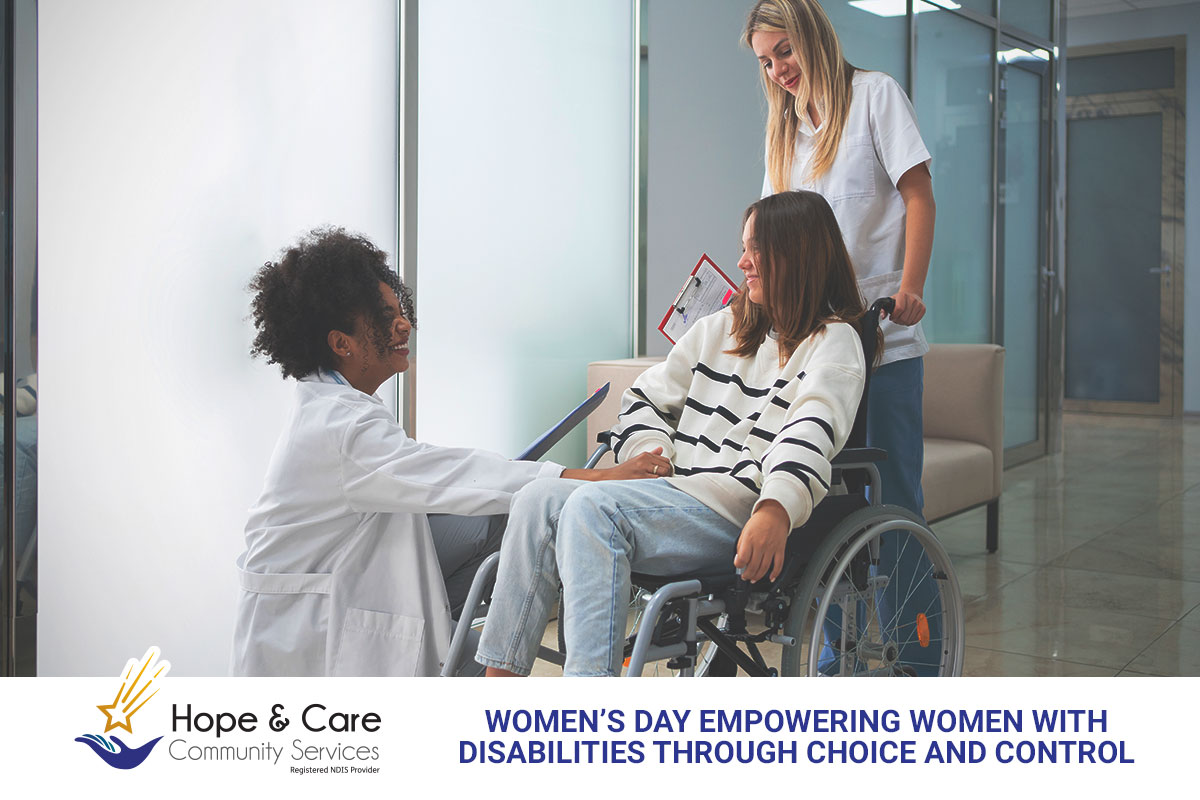
International Women’s Day recognises the achievements of women while also drawing attention to the barriers many continue to face. For women with disabilities, empowerment involves more than acknowledgement. It involves having choice, control and access to appropriate supports that enable participation in everyday life.
Under the National Disability Insurance Scheme (NDIS), choice and control support women with disabilities to make decisions about their lives, services and goals. Understanding the specific challenges women face helps families, communities and service providers deliver supports that are respectful and person-centred.
Understanding the Unique Challenges Women with Disabilities Face
Women with disabilities often experience overlapping challenges related to both gender inequality and disability. These barriers can affect daily life, access to services and long-term wellbeing.
Social Isolation and Limited Community Participation
Firstly, many women with disabilities experience social isolation due to limited transport, inaccessible community spaces and fewer inclusive social opportunities. As a result, isolation can affect confidence, mental health and overall quality of life. Without regular social interaction, women may struggle to participate in education, employment and community activities that support independence.
Barriers to Healthcare and Women’s Health Services
In addition, accessing healthcare can be more complex for women with disabilities. Inaccessible medical facilities, communication barriers and assumptions made by healthcare professionals can prevent women from receiving appropriate care. Consequently, delayed or inadequate healthcare may lead to poorer health outcomes and reduced independence. Accessible and inclusive healthcare remains essential for long-term wellbeing.
Increased Risk of Abuse and Exploitation
Furthermore, research shows that women with disabilities face a higher risk of abuse, neglect and financial exploitation. Because some women rely on others for personal or daily supports, reporting unsafe situations can be challenging. Therefore, disability support providers must prioritise safeguarding, informed consent and safe support environments to protect dignity and personal safety.
Employment Inequality and Financial Independence
At the same time, women with disabilities often face discrimination when seeking employment. Gender bias combined with disability-related barriers can lead to lower workforce participation, underemployment and reduced financial independence. However, with the right NDIS supports, women can build skills, confidence and pathways into meaningful employment that supports long-term stability.
Mental Health and Emotional Wellbeing
Similarly, ongoing barriers, stigma and exclusion can significantly affect mental health. Anxiety, low self-esteem and depression may develop when women feel unsupported or unheard. For this reason, emotional wellbeing remains a key component of independent living and achieving personal goals under the NDIS.
Why Choice and Control Matter Under the NDIS
Importantly, choice and control sit at the core of the NDIS and directly empower women with disabilities. When women direct their own supports, they actively shape their lives according to their values, preferences and aspirations.
For example, women can choose support workers they feel safe and comfortable with, set personal goals that reflect what matters to them and maintain control over daily routines. In addition, access to assistive technology, support coordination and flexible in-home supports helps women navigate services, advocate for their needs and increase independence. Together, these supports promote autonomy, confidence and self-determination.
The Role of Hope & Care Community Services
Hope & Care Community Services provides NDIS supports in line with participant plans and NDIS requirements. Services are delivered with a focus on participant choice, respectful communication and individual needs.
Supports may include assistance with daily living, community participation and support coordination, depending on a participant’s approved NDIS plan. Service delivery aims to align with participant goals and preferences while meeting relevant quality and safeguarding standards.
Reflecting This Women’s Day
Ultimately, this Women’s Day reinforces the importance of inclusion, respect and equal opportunity. When women with disabilities have access to quality NDIS supports, genuine choice and control, they can participate fully in their communities and shape their own futures with dignity and independence.
Want to learn more? Read other articles :
- Redefine Independence your own way – with HCCS
- Who’s Who: The Key Terms of Your NDIS Plan
- Foundational Supports: Building Blocks of NDIS Success
HCCS is a registered NDIS provider. Learn more about our services.
♥ We are available in Brisbane! – Our team is just a call away!