
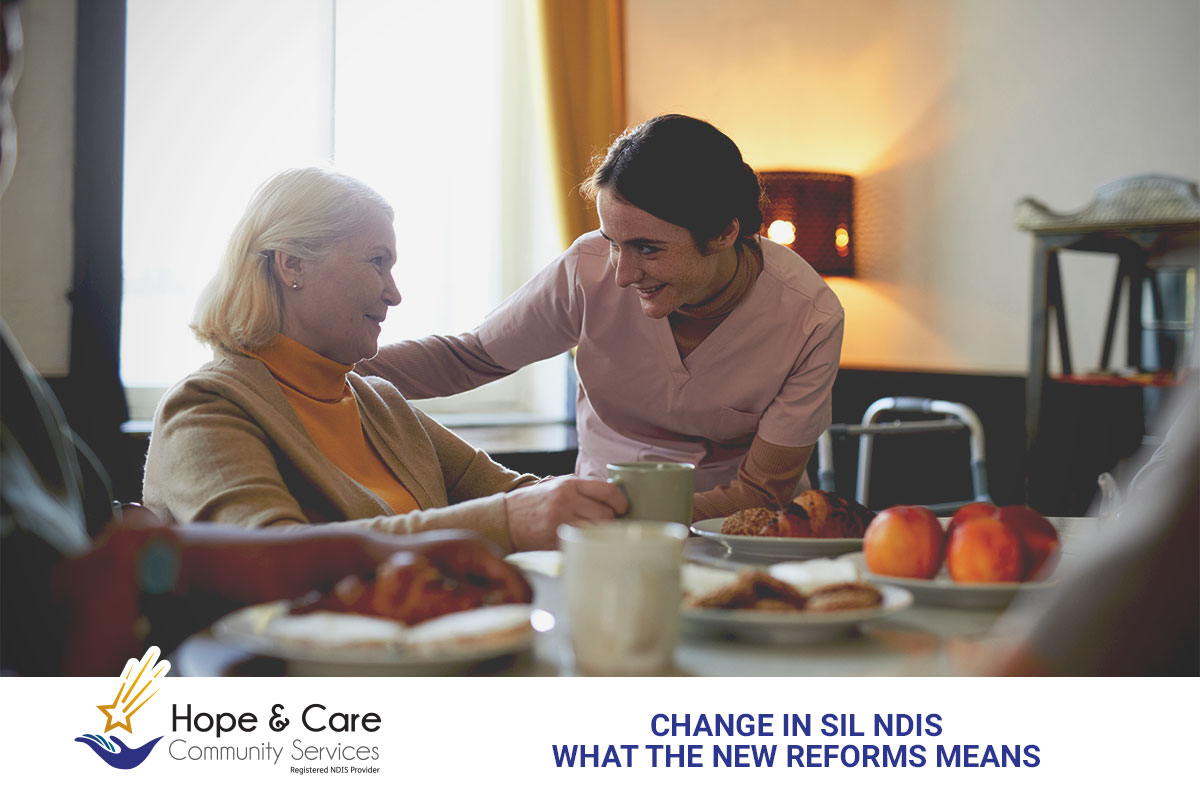
The Change in SIL NDIS marks one of the most important reforms to home and living supports under the National Disability Insurance Scheme. By July 2026, all Supported Independent Living (SIL) providers will need to register with the NDIS Quality and Safeguards Commission.
This reform aims to improve participant safety, strengthen service quality and create consistency across disability support services in Australia. While many welcome these changes, they also raise important questions for NDIS participants, families and providers particularly those in regional and remote areas.
What Is Supported Independent Living (SIL) Under the NDIS?
Supported Independent Living (SIL) is an NDIS-funded support that helps people with disability live as independently as possible. SIL supports are usually provided in shared accommodation or individual homes and are tailored to each participant’s needs and goals.
These supports often include assistance with personal care, daily household tasks, medication supervision and skill development. In many cases, SIL operates around the clock, providing ongoing support within the participant’s home environment.
Because SIL involves long-term, in-home support, it is classified as a high-risk NDIS support. This classification highlights the need for strong safeguards, consistent service delivery and clear accountability across all SIL providers.
Why Is the Change in SIL Registration Happening Now?
Over recent years, national reviews have identified gaps in oversight within home and living supports. The Disability Royal Commission and the Independent Review of the NDIS both found that participants receiving SIL sometimes experienced poor-quality care, limited accountability and inadequate safeguards.
Currently, many SIL providers operate as unregistered NDIS providers. While some deliver high-quality services, unregistered providers are not required to meet the full NDIS Practice Standards or complete independent audits. As a result, participants may face increased risks without consistent regulatory oversight.
To address these concerns, the NDIS Commission is introducing mandatory SIL provider registration. This change aims to improve safety, transparency and trust across the SIL sector.
What Will Change for SIL Providers?
Under the new Change in SIL NDIS reforms, all SIL providers must register with the NDIS Commission. Providers will also need to meet the full NDIS Practice Standards, including requirements around governance, participant rights, incident management and workforce screening.
In addition, providers must complete independent audits and participate in ongoing compliance monitoring. These measures ensure that SIL services meet consistent quality standards, regardless of provider size or location.
Overall, the reforms aim to raise the standard of Supported Independent Living services across Australia and strengthen confidence in disability accommodation services.
Key Dates and Transition Timeframes
The NDIS Commission plans to implement mandatory SIL registration by July 2026 using a phased transition approach. This approach is designed to minimise disruption for participants and providers.
The transition will include a defined application period, time to complete certification or verification audits and a staged rollout based on provider capacity and location. Importantly, consultation feedback has highlighted the need for flexibility for small providers and services operating in regional or remote communities.
By phasing the changes, the NDIS aims to protect participant continuity while supporting providers through the transition.
What the Change in SIL NDIS Aims to Achieve
The mandatory registration of SIL providers focuses on three key outcomes.
First, it aims to strengthen participant safeguards by ensuring all providers meet minimum safety and quality requirements. This includes clear systems for complaints, incident reporting and participant rights.
Second, the reforms seek to improve quality and consistency across SIL services. Clear standards for service delivery, workforce capability and governance will help reduce variation in care quality.
Finally, the changes will increase transparency and accountability. Participants and families will have clearer information about who provides supports and how services are regulated.
Together, these outcomes support a safer and more participant-centred NDIS.
Supporting Providers During the Transition
The NDIS Commission recognises that mandatory registration brings practical challenges. To support providers, it plans to offer clear guidance materials, compliance templates, workforce training opportunities and ongoing consultation.
In some cases, the Commission may also consider financial assistance or cost-reduction measures to support providers facing higher compliance costs. These supports aim to ensure that essential SIL services remain available to participants during and after the transition.
What This Means for NDIS Participants and Families
For participants, the Change in SIL NDIS represents a positive step toward safer and more reliable services. However, some participants may need to navigate provider changes if their current SIL provider chooses not to register.
Participants and families should stay informed about upcoming changes, understand their rights under the NDIS and plan for continuity of supports where needed. Working with a Support Coordinator or Plan Manager can help ensure a smooth transition if changes occur.
Throughout this process, choice and control remain central to the NDIS.
How Hope & Care Community Services Is Responding
At Hope & Care Community Services, we welcome reforms that improve safety and service quality. As a registered NDIS provider in Queensland, we already meet the NDIS Practice Standards and deliver person-centred Supported Independent Living services.
Conclusion: Preparing for the Future of SIL
The Change in SIL NDIS marks a major shift in how Supported Independent Living services operate under the NDIS. While the transition may present challenges, it also creates opportunities to strengthen safeguards and improve service quality across the sector.
Hope & Care Community Services remains committed to supporting participants through this change and contributing to a safer, more sustainable NDIS for the future.
*This content is for general information only and is based on publicly available NDIS information at the time of writing. Please refer to official NDIS guidance for the most up-to-date information.
Want to learn more? Read other articles :
- Experience a Fuller Life with Daily Living Assistance
- Exploring NDIS SIL Properties with Hope and Care
- Individualised Living Options (ILO) in the NDIS. How can it work for you?
HCCS is a rergistered NDIS provider. Learn more about our services.
♥ We are available in Brisbane! – Our team is just a call away!