
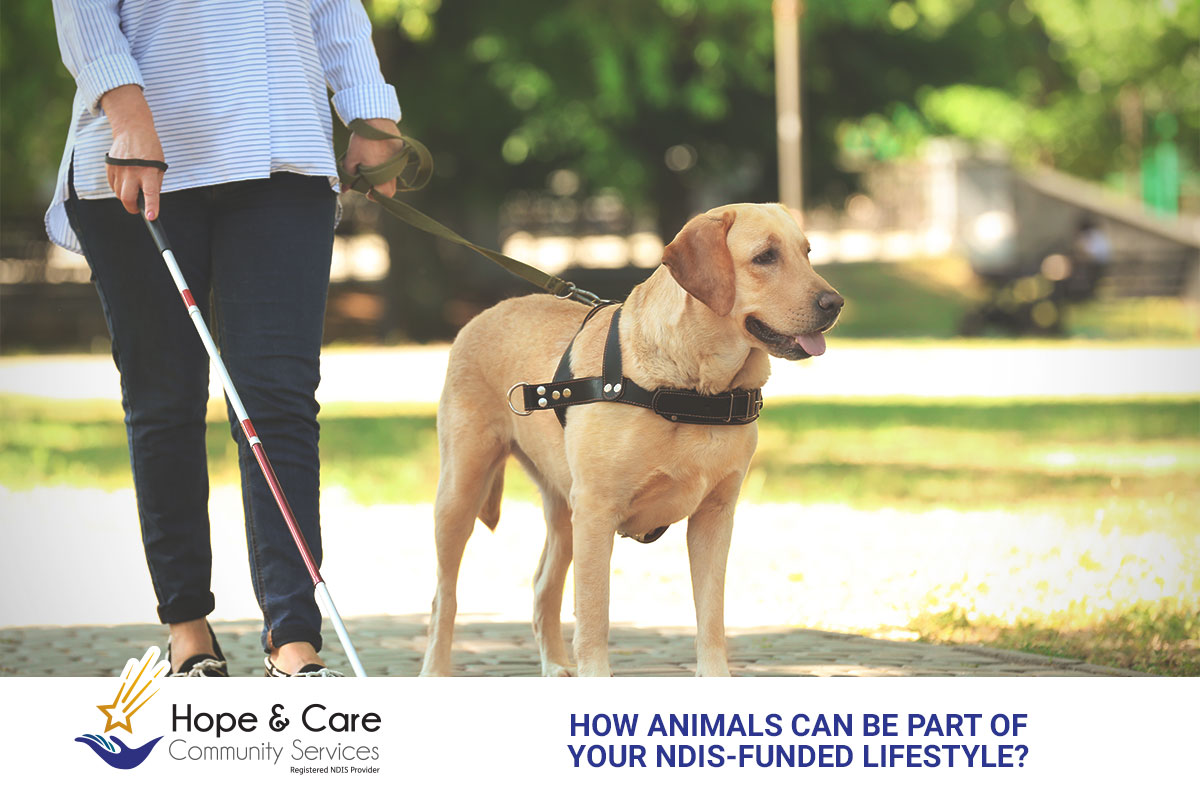
Pets and the NDIS are often discussed together because animals can play an important role in everyday wellbeing. For many people living with a disability, animals provide companionship, routine, emotional comfort and motivation. As a result, it is natural to ask how pets or animals fit into an NDIS-funded lifestyle.
While the NDIS does not usually fund everyday pet ownership, it does recognise assistance animals in specific circumstances. Understanding this difference helps participants plan clearly and make informed decisions.
How the NDIS Views Pets and Animals
To begin with, the NDIS clearly distinguishes between assistance animals and pets or companion animals. This distinction determines whether the NDIS may consider funding.
The NDIS recognises assistance animals as disability supports when they help a participant manage the functional impacts of their disability. In contrast, the NDIS treats pets and companion animals as everyday living expenses, even when they provide emotional benefits.
Because of this, participants must understand what qualifies as an assistance animal before seeking funding.
Assistance Animals and the NDIS
What Is an Assistance Animal?
An assistance animal performs specific, trained tasks that directly reduce the impact of a person’s disability. These tasks go beyond companionship and provide practical, disability-related support.
For example, assistance animals may:
- Guide or support people with vision impairment
- Alert individuals to sounds or medical conditions
- Assist people with psychosocial disability by performing trained tasks that support safety, regulation or independence
To qualify under the NDIS, the animal must perform multiple disability-related tasks, behave appropriately in public spaces and clearly support the participant’s NDIS goals.
What the NDIS May Fund for an Assistance Animal
When an assistance animal meets the required criteria, the NDIS may fund supports linked to the animal’s role as a working disability support.
Specifically, the NDIS may fund:
- The cost of acquiring a trained assistance animal
- Training for the animal and, in some cases, the participant
- Equipment needed for the animal to perform its tasks safely and effectively
However, once the animal stops working as an assistance animal, NDIS funding usually ends. This applies even if the animal continues to live with the participant.
Why the NDIS Does Not Fund Pets
Although pets often improve emotional wellbeing and quality of life, the NDIS classifies them as part of everyday living. As a result, pets and the NDIS generally do not overlap when it comes to funding.
The NDIS does not fund:
- Pet food or grooming
- Boarding, pet sitting or kennel fees
- Routine veterinary care
- Pet insurance
- Animals kept primarily for companionship or emotional support
Even when a pet reduces loneliness or anxiety, the NDIS requires a clear link to disability-related tasks before considering any funding.
Planning for an Assistance Animal in Your NDIS Plan
If you believe an assistance animal could support your disability needs, you should plan carefully. First, clearly explain how the animal would help you with daily activities, safety, independence or community access.
Next, gather professional assessments where appropriate. Allied health reports can explain how the assistance animal addresses functional needs and supports your goals.
Then, ensure your NDIS goals clearly reflect the outcomes the assistance animal supports. For example, goals may focus on increasing independence, reducing risk, improving emotional regulation or supporting participation in the community.
By clearly linking the assistance animal to your goals, you strengthen your overall plan.
Alternative Ways to Include Animals in Your Lifestyle
Even if an animal does not qualify as an assistance animal, you can still include meaningful animal interactions in your life.
For instance, some participants take part in structured animal-based activities that support therapy or wellbeing goals. Others include animal-related experiences through community participation, such as visiting farms, animal programs or volunteering.
When these activities align with broader goals like social inclusion, confidence-building or routine, participants can still enjoy the benefits of animals while staying within NDIS guidelines.
Balancing Pets and the NDIS
Ultimately, pets can enrich life by providing companionship, comfort and routine. However, when it comes to pets and the NDIS, only animals that meet the definition of an assistance animal qualify as funded disability supports. By understanding this boundary, participants can plan realistically and focus on supports that meet NDIS criteria. With clear goals, appropriate evidence and thoughtful planning, assistance animals can become a valuable part of an NDIS-funded lifestyle. At the same time, alternative animal-related activities can still offer meaningful connection and wellbeing.
Want to learn more? Read other articles :