
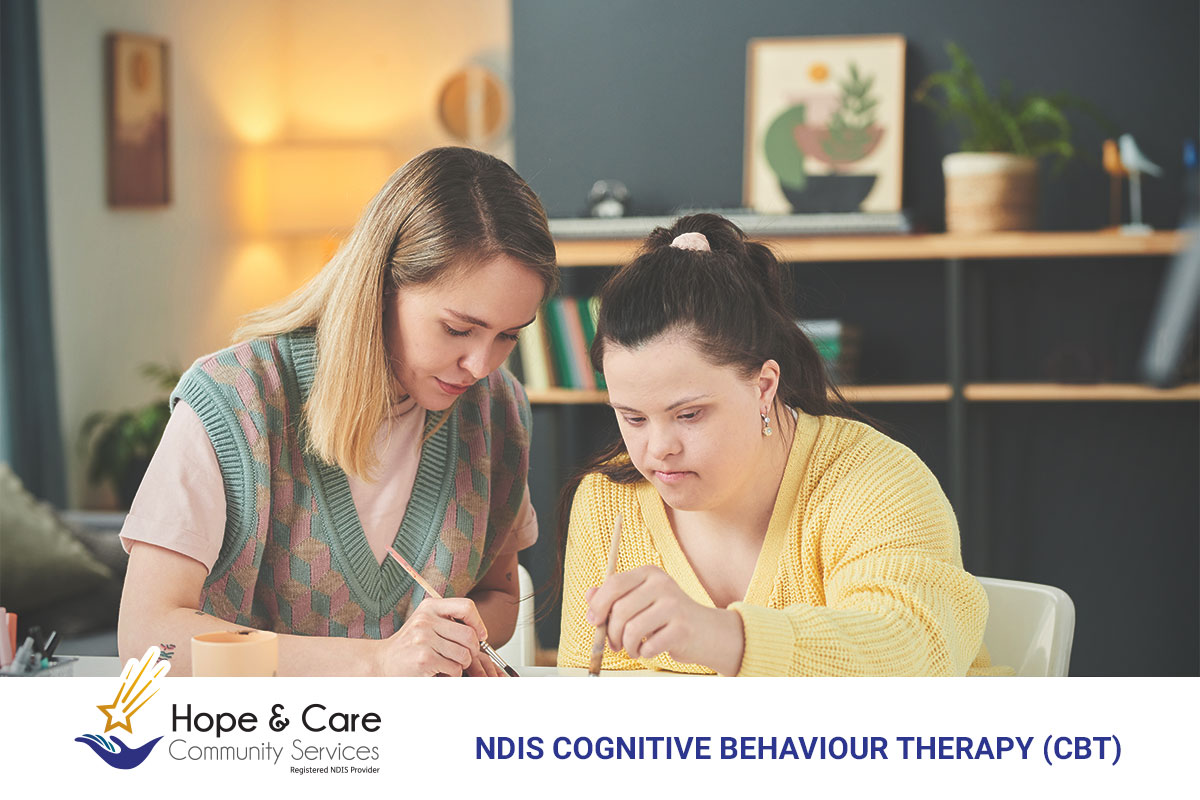
Cognitive Behaviour Therapy (CBT) is an evidence-based psychological approach that focuses on how thoughts, emotions and behaviours interact. Within the NDIS context, cognitive behaviour therapy may be relevant for some participants and across Australia clinicians commonly use CBT to support people who experience anxiety, emotional regulation difficulties or behavioural challenges.
Within the National Disability Insurance Scheme (NDIS), CBT may be relevant in specific and limited circumstances. In particular, the NDIS may consider CBT when it supports disability-related functional capacity and aligns with a participant’s stated NDIS goals. Importantly, CBT is not automatically funded under the NDIS and does not replace mainstream mental health services.
This article explains how NDIS Cognitive Behaviour Therapy fits within disability supports, outlines the evidence base and clarifies key funding considerations.
What Is Cognitive Behaviour Therapy (CBT)?
Cognitive Behaviour Therapy is a structured and goal-focused psychological intervention. It helps individuals recognise unhelpful thinking patterns and develop practical strategies to manage emotions and behaviours more effectively.
Specifically, CBT supports individuals to:
- Understand the connection between thoughts, feelings and behaviour
- Learn coping and problem-solving strategies
- Gradually address avoided or anxiety-provoking situations
- Practise new skills in everyday settings
For autistic children, clinicians often adapt CBT to suit developmental level, communication style and learning needs. For example, therapists may use visual supports, structured routines, concrete language and repetition to improve understanding and engagement.
How CBT Is Used With Autistic Children
Research shows that autistic children experience higher rates of anxiety and emotional regulation challenges than non-autistic peers. As a result, these challenges can affect learning, social participation and daily routines.
When clinicians adapt CBT appropriately, it may support some autistic children to:
- Better understand their emotional responses
- Identify triggers for anxiety or distress
- Develop emotional regulation and coping skills
- Improve participation in everyday activities
However, it is important to note that CBT does not suit every autistic child. Outcomes depend on individual factors such as cognitive ability, language skills and support needs. Therefore, professionals must assess suitability on a case-by-case basis.
Evidence Base for CBT and Autism
Evidence reviews commissioned by the NDIS and synthesised by the Autism CRC indicate that CBT can lead to positive outcomes for some autistic children. In particular, research shows improvements in anxiety reduction, emotional wellbeing and certain adaptive behaviours.
That said, the evidence also shows that:
- Outcomes vary across individuals
- The quality of evidence differs between outcome areas
- CBT is not universally effective
For these reasons, professionals consider CBT as one evidence-informed option rather than a standard or guaranteed intervention.
How CBT Is Typically Delivered
Qualified mental health professionals, such as registered psychologists or therapists trained in CBT, deliver Cognitive Behaviour Therapy. Typically, sessions follow a structured format and focus on agreed goals.
CBT delivery commonly includes:
- Assessing emotional and behavioural patterns
- Setting functional, goal-oriented outcomes
- Providing psychoeducation about emotions and stress responses
- Teaching coping and regulation strategies
- Gradually exposing individuals to anxiety-provoking situations
In addition, clinicians often collaborate with families, educators and disability support teams. This collaboration helps reinforce strategies across home, school and community environments.
NDIS Funding for Cognitive Behaviour Therapy
CBT is not automatically funded under the NDIS. Instead, the NDIA assesses funding based on whether the support meets the “reasonable and necessary” criteria and relates directly to a participant’s disability.
The NDIS may consider CBT-related supports when they:
- Address functional impacts of a disability
- Focus on capacity building rather than clinical treatment alone
- Align clearly with goals in the participant’s NDIS plan
- Support participation in daily life, education or the community
Conversely, when CBT primarily treats a mental health condition without a clear link to disability-related functional outcomes, participants usually access it through the mainstream health system.
Therefore, accurate framing and goal alignment remain essential.
Understanding CBT Within NDIS Disability Supports
Within the NDIS framework, CBT plays a specific and defined role. Most effectively, it supports skills such as emotional regulation, routine participation and social engagement when disability affects these areas.
As a result, participants and families benefit from understanding how CBT fits within broader disability supports rather than viewing it as a general mental health service.
Conclusion
Cognitive Behaviour Therapy is an evidence-based psychological approach that may support some autistic children and NDIS participants when clinicians adapt it appropriately and link it to functional, disability-related outcomes.
Within the NDIS, CBT works best as part of a coordinated, capacity-building approach rather than as a standalone treatment. Consequently, understanding its scope, limitations and funding context helps participants and families make informed decisions and access appropriate supports.
About Hope & Care Community Services (HCCS)
Hope & Care Community Services (HCCS) is a registered NDIS provider in Brisbane supporting participants across Queensland through person-centred disability services. HCCS focuses on capacity-building supports, coordination and collaboration with allied health professionals to help participants work towards their individual NDIS goals.
*This article is for general information only Always refer to the official NDIS website for the most up-to-date information.
Want to learn more? Read other articles :